


After receiving a phone call last night from ex-councillor John Robson, I spent a lot of time going through the Mauao report by KC Paul Davison. I also went through public statements made after the Mount landslide and I’m concerned by the comments coming from Marty Grenfell Tauranga City Council’s Chief Executive.
I also keep coming back to Paul Davison’s report and what does it really mean when we describe something as a “systemic failure.”
Are we saying something terrible happened, the system failed, new policies will be written, lessons will be learned, and then everyone just goes back to the life they had before?
Because the people most damaged by that failure do not get to move on in the same way. Families are left grieving. Communities are left asking how the warnings were missed. Trust is broken, and no new policy or carefully worded apology can undo that.When people are taken from their loved ones in circumstances a report describes as preventable, who is actually accountable for making sure the same thing cannot happen again?
I know there will be people who say it is more complicated than that and I understand there were different teams, different reports, different roles, different rules and different inquiries…etc…. There are also many people who have been carrying the weight of what happened on 22 January, and who will never be able to go back to the life they had before that day.
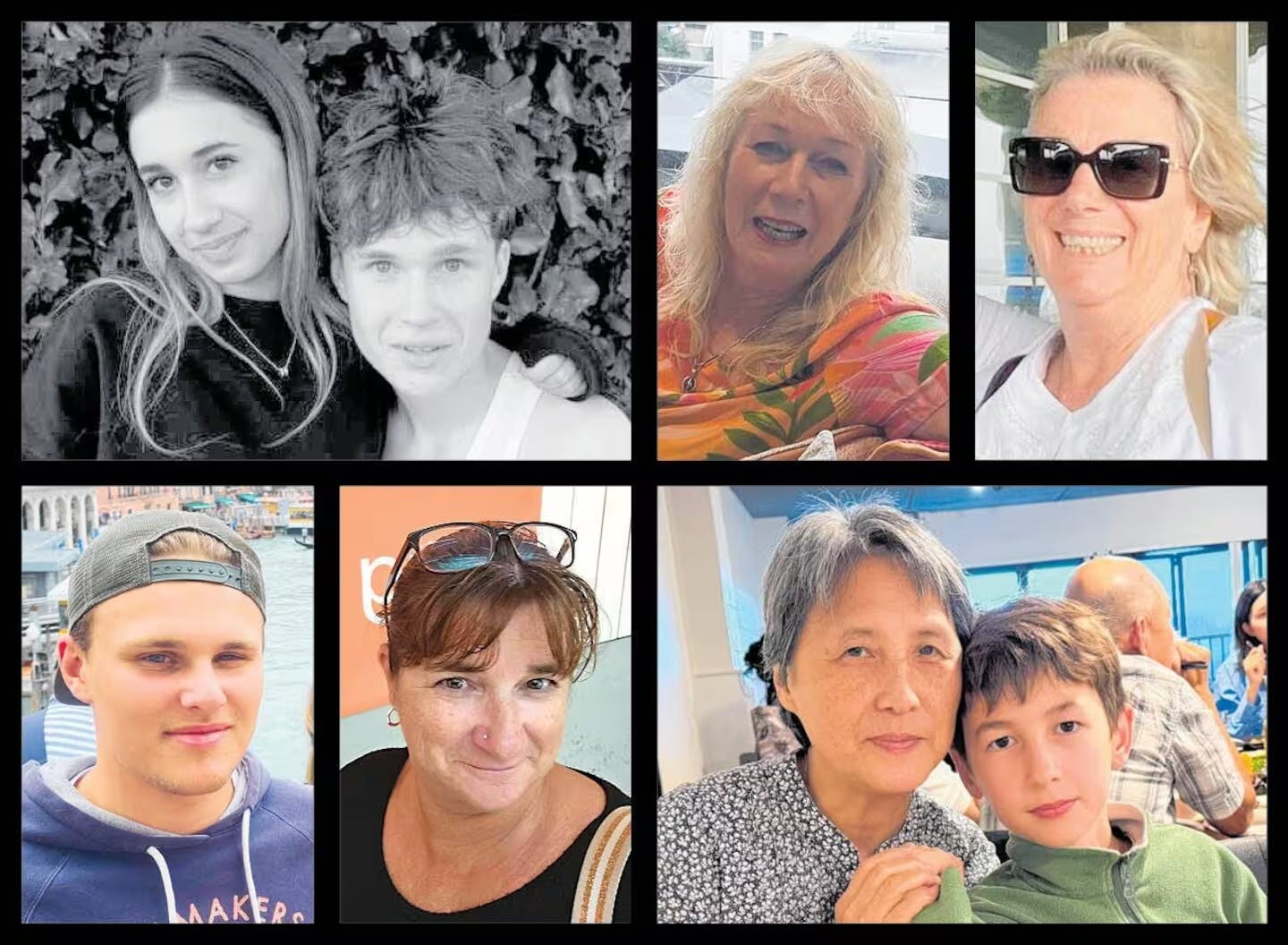
But six people went to stay at a Council-owned and operated campground beneath Mauao, and they never returned home. To me, that is bigger than process, bigger than reputation management and bigger than whichever part of Council had responsibility for which piece of the mountain.
Davison’s review says the tragedy was preventable. It says the hazard was known, that effective measures had been recommended, and that the organisation did not have a system able to hold, assess and act on the risk.
That is hard enough to hear, but what has made it even worse is the pattern now emerging in public statements from the Chief Executive.
Days after the landslide - Chief executive Marty Grenfell told the Herald the council had “no record” of a 111 call placed by local Alister McHardy, who had seen slips around the Mt Maunganui mountain before 6am on Thursday, ahead of the landslide at 9.31am.
Grenfell’s account conflicted with that of Fire and Emergency New Zealand deputy national commander Megan Stiffler, who said “Our call-takers made contact with the Tauranga City Council, the landowners of the camping ground, and notified them of this information at 5.51am.”
Today, following the Davison review, Mr Grenfell has said he was never made aware of a risk to life or a risk of slips at Mauao during the eight years he has led the organisation. He described the review as accurate, damning and confronting, said the failure was a systems issue, and said he believes he is best placed to lead the changes needed from here

These public records now raise another serious question about what the organisation received, what it knew, how it escalated risk and what its leaders were told.
You cannot ask a community to have confidence in the same leadership team responsible for a system that failed, while also accepting that the people at the top may not know what the system was receiving, circulating or failing to act on.
These questions go to the heart of public trust.
The agenda that was already there
Back in May, Lobby For Good published an unpaid, independent public-interest investigation into the Mauao landslide. We were not commissioned to do it, we did it because Council documents were being released in tranches, and we believed the public deserved help making sense of the warnings, the timeline and the questions still left unanswered.
One document released through that process is particularly difficult to ignore in light of the Chief Executive’s latest media comments.
The 6 June 2025 HD Geo Mauao, Mount Maunganui Geohazard Review Report was attached to the agenda for the Ngā Poutiriao ō Mauao and Mauao Trust joint meeting scheduled for 6 August 2025. The agenda was issued under the name of Chief Executive Marty Grenfell. It was circulated to a joint board containing four Tauranga City Council-appointed representatives and four Mauao Trust-appointed representatives. That report, highlighted real concerns and a “high rockfall risk that could affect Council campground assets and users.”
So, now we know that the information was circulated, so what happened next? Were the people receiving the agenda reading it? Did anyone ask for expert advice? Was the report sent to the Council’s natural-hazards specialists? Was the risk put on a register? Was the recommendation for a TARP taken forward, funded, rejected or simply left?
These are the questions everyday people would assume are being asked by their elected members when a Council report identifies risk to people sleeping in a Council-operated campground.

A lack of quorum is not a lack of responsibility
The joint board’s terms of reference say formal business cannot be transacted without a quorum. If the meeting did not progress because a quorum was not present, that does not change the fact that the agenda and its attachments had already been circulated.
It does not stop someone from raising concerns, it does not stop a risk being escalated to people with the expertise to assess it, it does not stop a councillor from asking whether the report needs to go somewhere else, or whether Council has done what it needs to do.
Surely, when a report identifies the risk of death around a Council-operated campground, someone should be asking what happens next. Surely elected members are reading the agendas they are sent, and surely the Chief Executive understands the significance of the reports moving through the organisation he leads.
It is also worth noting that Councillor Glen Crowther was not one of the Council-appointed members on this joint board. Glen has developed a reputation for asking questions that other people may find uncomfortable. We will never know what questions he may have asked if he had been there. But this is exactly why scrutiny matters and why questions that feel inconvenient in a meeting, can sometimes be the questions that reveal what everybody else has missed.
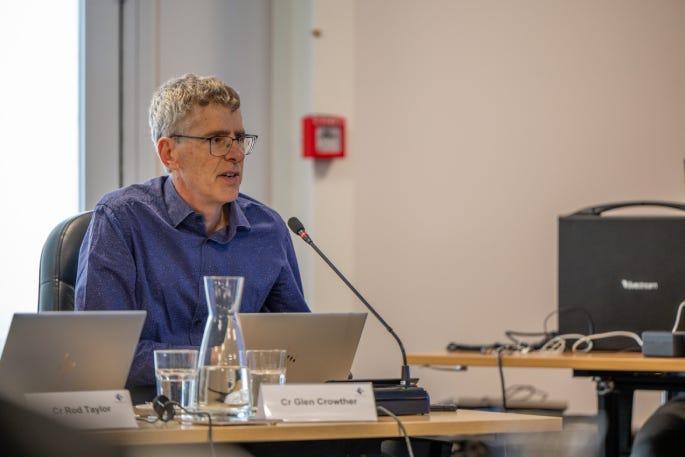
Elected members are not expected to be geotechnical engineers, lawyers or emergency managers. Staff do have expertise, but receiving a staff report, nodding politely and avoiding questions is not the same thing as governance.
Elected members have a responsibility to scrutinise what is in front of them, even more so when it involves risk to life.
“Systemic failure” cannot be the end of the story
Davison’s review does not find that any individual intentionally or deliberately did anything wrong, and it does not make findings of civil, criminal or disciplinary liability. There are other enquiries happening but only 2 of the 5 can determine liability, WorkSafe and Police.
But that does not mean accountability should stop while we wait for those investigations/reports to be finalised.
The Council has accepted the review’s findings and instructed the Chief Executive to provide an implementation plan. That plan needs to do more than repeat the words “systemic failure” and promise a new process. It needs to explain the pathway of the June 2025 report, identify who was responsible for taking it further, show why the TARP did not happen, and set out how elected members and the public will know that the recommendations are actually being implemented.
I have said before, and I will say it again: one of the most concerning things I have learned through the Marine Precinct saga is that I genuinely do not know what the role of elected members is anymore.
I have spent more hours than I can count in meetings about the sale of Tauranga’s Marine Precinct. In October 2024 we spoke to elected members highlighted exactly where we believed that decision was heading.
WATCH VIDEO HERE
There is no comfort in being right when you are watching the people elected to protect the public interest avoid independent thinking on decisions involving public assets and ratepayer money.
It is stressful, it’s exhausting, it’s expensive, and it’s angering. You spend your own time, own money and own energy trying to point out that something does not add up, only to find yourself explaining basic governance questions to the very people who should have been asking them in the first place.
I am not going to use this article to litigate the Marine Precinct sale. There are legal and other processes still to run, but the experience has made one thing very clear to me…. elected members cannot treat staff advice as the end of the conversation. Staff expertise matters, but so does independent scrutiny, the willingness to seek outside advice when necessary, and the courage to ask questions when something does not feel right.
That is why the Mauao report really concerns me. It comes at a time when ratepayers are already looking at the scale of debt and financial pressure Tauranga is carrying, and asking how so many major decisions have been made without stronger independent scrutiny.
This is not about suggesting that debt caused the Mauao tragedy. But when a Council is spending hundreds of millions on a civic precinct while its main tourist area has a known safety risk that was not properly assessed, escalated or acted on, people should be asking questions about priorities.
This is about recognising the same governance problem - elected members cannot simply take comfort in the fact that staff have a plan or that someone else is responsible for the detail. They have to test the advice, ask who owns the risk, seek independent advice when it is needed and make sure serious concerns do not disappear between teams, meetings and reports. That is their role and it is why the people of Tauranga voted for them.
Elected members are not expected to be geotechnical engineers, lawyers or emergency managers. But they are expected to read the material put in front of them, understand when it raises a serious risk, and make sure the right questions are being asked.
Give me 100 councillors around the country like Cr. Glen Crowther, and I might finally start believing elected members are being allowed to do the job they were elected to do.
In closing, this is not about attacking people who work at Council. It is about recognising that good people can still work inside systems that fail, and that the people leading those systems must be able to give clear, accurate and honest answers when those failures cost lives.
Six people died. The review says their deaths were preventable. We should not allow the answer to end at “systemic failure”. We need to know how the warnings moved, where they stopped, who was meant to act and what meaningful accountability looks like now.
Share your thoughts in the comments. When information was available, the failures are described as systemic and the deaths are described as preventable, who is responsible for making sure real accountability follows?
Thanks for reading - Erika
Sources and further reading
[1] Paul Davison KC external review and Tauranga City Council release, 19 August 2026
[5] Ngā Poutiriao ō Mauao and Mauao Trust joint-meeting agenda, 6 August 2025
[6] Lobby For Good: Mauao Landslide — Research & Liability Analysis, May 2026
Editorial note
This article raises public-interest questions based on released records and reported public statements. It does not allege that any named individual deliberately misled the public or is criminally, civilly or disciplinarily liable. The Government Inquiry, Coroner, Police and WorkSafe processes remain active.
A “Sh*t Deal” for Tauranga. Will Anyone Be Held Accountable, or Will It Become Another Inherited “Systemic Failure”

Tauranga’s elected Council did not make the Marine Precinct deal. But once it took office, it had choices. The deal was reconsidered, varied, defended through litigation, and backed by further public money. So when does an inherited problem become your responsibility?
GRENFEL & MAUAO TRUST BOTH KNEW JUNE 2025 OF THE RISK -
THEY HAD A MEETING ABOUT IT.
RESIGN GRENFEL.
RESIGN MATEMOANA MCDONALD
"Systemic failure"--If I recall correctly, that was the exact phrase used to justify why nobody got into trouble over Cave Creek, some thirty years ago now.